Temple of Kom Ombo & Crocodile Museum: Travel Guide & History | Cheers Egypt Tours

Temple of Kom Ombo & Crocodile Museum: Travel Guide & History | Cheers Egypt Tours
Temple of Kom Ombo & The Crocodile Museum: The Dual Sanctuary of the Nile
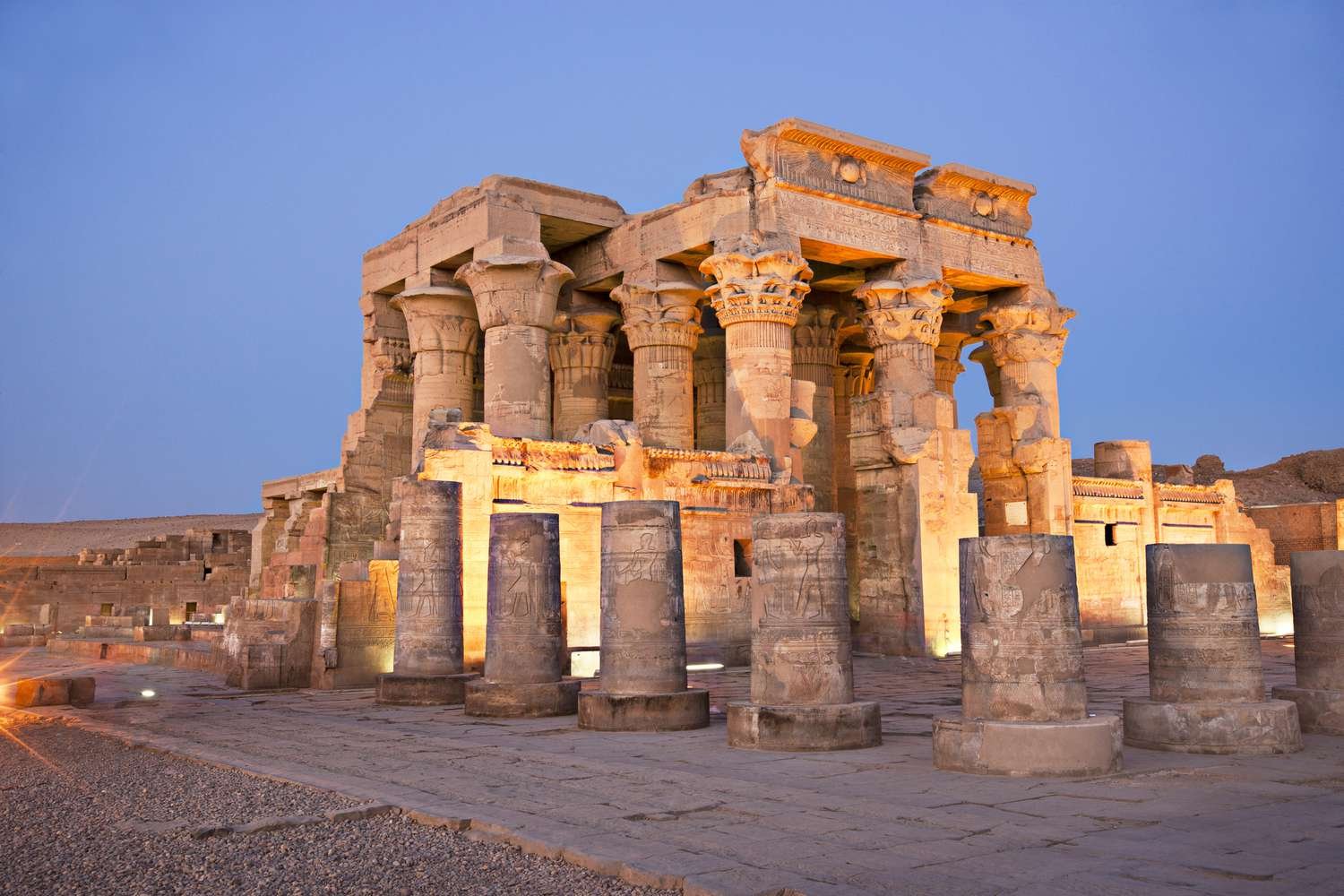
Perched dramatically atop a high sandstone promontory overlooking a picturesque bend in the Nile, the Temple of Kom Ombo stands as one of the most distinctive architectural achievements of ancient Egypt. Situated approximately 45 kilometers north of Aswan, this Greco-Roman sanctuary is renowned throughout the archaeological world for its rare, perfectly symmetrical twin design. Dedicated simultaneously to two opposing yet complementary deities—Sobek, the fierce crocodile god of fertility and creation, and Haroeris (Horus the Elder), the winged solar falcon of cosmic harmony—Kom Ombo represents an extraordinary theological balance. Directly adjacent to the temple ruins, the modern Crocodile Museum completes this fascinating journey into antiquity, showcasing remarkable mummified Nile crocodiles and ancient cult sarcophagi discovered in nearby necropolises.
- A rare dual architectural layout: perfectly duplicated courts, hypostyle halls, sanctuaries, and entrance gates for two rival gods.
- Ancient surgical and medical instrument bas-reliefs, illustrating scalpel blades, forceps, bone saws, and birthing chairs.
- An ancient Nilometer and deep ceremonial sacred well used to calculate agricultural harvest taxes and Nile inundation levels.
- The adjacent Crocodile Museum, housing dozens of exquisitely preserved mummified crocodiles and sacred clay coffins.
- Expedition synergy: Connect your Upper Nile exploration with our curated guides to the falcon sanctuary at the Temple of Horus at Edfu, the island retreat of Philae Temple in Aswan, and our comprehensive Luxury Nile Cruise Planning Guide.
The Dual Sanctuaries: Symmetry in Stone
Constructed primarily during the Ptolemaic Dynasty (180–47 BCE) under Ptolemy VI Philometor and expanded by Roman emperors including Augustus, Kom Ombo honors two distinct divine families. The southern half is devoted to Sobek along with his consort Hathor and son Khonsu, while the northern half honors Haroeris along with his consort Tasenetnofret and son Panebtawy.
The Ancient Surgical Instruments Relief
One of Kom Ombo’s most famous discoveries is found along the interior face of the rear enclosure wall. Carved with meticulous precision is a Roman-period bas-relief depicting an array of sophisticated medical tools: bone saws, curved scalpels, catheters, speculums, dental forceps, cupping vessels, and medicine flasks. Nearby sits an ancient birthing stool flanked by two goddesses aiding a seated woman in labor. This extraordinary relief suggests that Kom Ombo functioned not only as a religious temple but also as an important healing center and pilgrimage infirmary for the ancient Nile Valley.
“Where the Nile bends at Kom Ombo, the ancients reconciled predator and sky—balancing raw primal power with divine wisdom and the healing arts.”
The Crocodile Museum: Eternity in Linen & Clay
In ancient times, the sandbanks below Kom Ombo teemed with wild Nile crocodiles basking in the sun. Believed to be the earthly incarnations of Sobek, select crocodiles were revered, nurtured with honeyed cakes, adorned with golden ear pendants, and mummified upon natural death. Inaugurated in 2012, the Crocodile Museum sits right beside the temple exit, displaying over twenty real mummified crocodiles of varying ages—from hatchlings to formidable five-meter adults—along with wooden sarcophagi, bronze votive statues, and crocodile eggs.
Discerning Traveler Tips
- River Dock Accessibility: Kom Ombo is one of the easiest temples to visit on a Nile cruise—vessels dock directly at the foot of the hill, allowing you to walk right from the ship’s gangway up to the temple gate in under two minutes.
- Atmospheric Evening Lighting: Most Nile cruises arrive during the late afternoon or twilight hours. The temple is brilliantly floodlit after dusk, highlighting its sandstone reliefs against the dark river backdrop while avoiding daytime heat.
- Included Museum Admission: The standard temple entrance ticket issued by the Ministry of Tourism and Antiquities includes entry to both the Kom Ombo Temple ruins and the Crocodile Museum.
- Cashless Card Mandate: The ticketing office requires payment via international debit or credit cards (Visa or Mastercard). Cash is not accepted for official entrance tickets.
Experience Kom Ombo with Cheers Egypt Tours
Deciphering the nuanced dual religious theology, oracle mechanisms, and medical treatises carved upon the stones of Kom Ombo requires scholarly expertise and smooth logistical planning. When you explore Upper Egypt with Cheers Egypt Tours, your visit becomes a seamless, luxury experience.
Our guests are escorted by certified senior Egyptologists who decode the intricate medical texts, explain astronomical calendars, and navigate the site to avoid congested cruise groups. Whether arriving aboard one of our handpicked 5-star luxury Nile cruise vessels or via private chauffeured luxury transfer from Aswan or Luxor, reserving with Cheers Egypt Tours guarantees first-class service, pre-arranged fast-track ticketing, and unhurried historical immersion.
Frequently Asked Questions
Why was Kom Ombo built for two different gods?
The region around Kom Ombo was historically infested with dangerous Nile crocodiles, leading locals to worship and appease Sobek to protect their boats and families. Simultaneously, Horus the Elder represented divine justice and order. To unite these religious factions and honor both regional traditions, Ptolemaic architects engineered a completely symmetrical sanctuary with mirrored gates, courtyards, and inner chapels for each god.
Is the Crocodile Museum included in the temple entrance ticket?
Yes. Your general admission ticket to Kom Ombo Temple includes full access to the air-conditioned Crocodile Museum located just outside the exit plaza. It is a quick 20-to-30-minute visit displaying mummified crocodiles, wooden coffins, and ritual votive offerings.
How much time is required to tour Kom Ombo Temple and the museum?
A comprehensive guided visit takes approximately 1.5 to 2 hours. This provides ample time to explore both sides of the temple, examine the medical instrument reliefs and nilometer, enjoy panoramic views of the Nile at sunset, and walk through the Crocodile Museum.
Why should I book my Kom Ombo tour with Cheers Egypt Tours?
Cruising docks at Kom Ombo can be bustling with competing crowds when multiple ships arrive at once. Cheers Egypt Tours provides private licensed senior Egyptologist guides, curated arrival timing to avoid major tour groups, seamless cashless ticket management, and private transfers that ensure a peaceful, deeply enriching visit.
[EXCERPT] Discover the unique dual Temple of Kom Ombo and the Crocodile Museum with expert Egyptologist insights. Explore Sobek, ancient medical reliefs, and luxury private tours with Cheers Egypt Tours. [/EXCERPT]
Our articles are researched and written by licensed master Egyptologists and private VIP concierges with decades of experience escorting international travelers across Egypt.