

Pompey’s Pillar Alexandria: Travel Guide, Serapeum History & Tickets | Cheers Egypt Tours

Pompey’s Pillar Alexandria: Travel Guide, Serapeum History & Tickets | Cheers Egypt Tours
Pompey’s Pillar & The Serapeum of Alexandria: Roman Monolith & Travel Guide
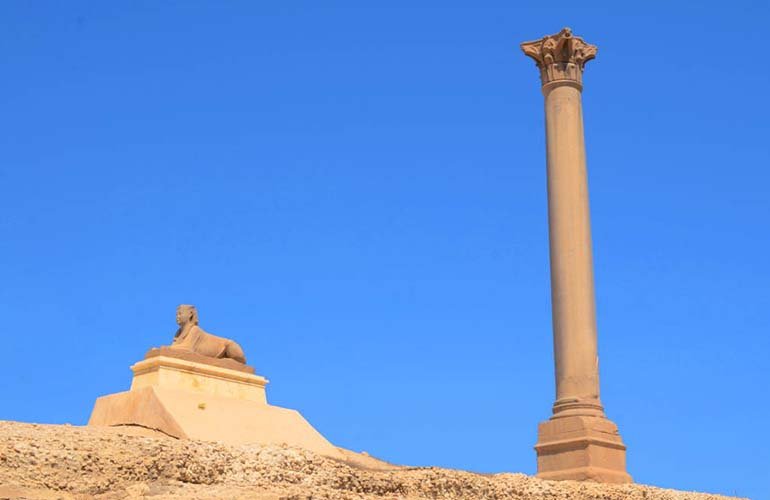
Soaring high above the ancient mound of Rhakotis in modern Karmouz, Pompey’s Pillar stands as the largest monolithic memorial column carved in antiquity outside Rome and Constantinople. Towering nearly 27 meters into the Mediterranean sky, this colossal red Aswan granite landmark dominates the archaeological hill of Alexandria. Despite its popular Crusaders-era misnomer attributing it to the Roman general Pompey, this triumphal monument was actually erected in 297 CE in honor of the Roman Emperor Diocletian. Standing amidst the subterranean crypts and ruined foundations of the grand Serapeum—antiquity’s most sacred temple of Serapis and the sister annex to the Ancient Library of Alexandria—Pompey’s Pillar remains an essential monument illustrating the majestic culmination of Greco-Roman Egypt.
- A single monolithic red Aswan granite column weighing approximately 285 metric tons and standing 26.85 meters tall.
- The historic ruins of the Serapeum, the imperial sanctuary commissioned by Ptolemy III Euergetes to honor Serapis.
- Subterranean crypts, library chambers, and rock-cut tunnels that housed the daughter collection of the Great Library of Alexandria.
- Two intact pink granite sphinxes flanking the monumental platform.
- Expedition synergy: Connect your Alexandrian journey with our curated guides to the subterranean marvels of the Catacombs of Kom El Shoqafa, the seaside ramparts of the Citadel of Qaitbay, and our premier multi-day Luxury Nile Cruise Planning Guide.
The Imperial Monolith: Engineering & Historical Truth
The name “Pompey’s Pillar” was popularized by medieval European travelers and Crusaders who mistakenly believed the Roman general Pompey was buried here after being murdered by Ptolemy XIII in 48 BCE. However, an ancient four-line Greek inscription carved into the western face of the base confirms that Publius, the Roman prefect of Egypt, erected the column to honor Emperor Diocletian for lifting the brutal siege of Alexandria in 297 CE and distributing grain to the starving population.
The Serapeum & The Lost Daughter Library
While Pompey’s Pillar commands the skyline, the hill on which it stands holds profound cultural resonance. In the 3rd century BCE, Ptolemy III constructed the magnificent Serapeum here to honor Serapis—a synthetic deity combining Osiris, Apis, Zeus, and Hades created to unite Egyptian and Greek subjects. When the main Library of Alexandria ran out of archival capacity, an annex known as the “Daughter Library” was built within the Serapeum’s colonnaded cloisters, holding over 42,000 papyrus scrolls. Beneath the pillar’s foundation, visitors can descend into the surviving subterranean galleries where priests performed mystery cult initiations and scholars studied sacred scrolls in wall niches.
“Standing beneath the granite shadow of Pompey’s Pillar, you stand upon Rhakotis—the very ancient ground from which Alexander envisioned his Mediterranean capital.”
Discerning Traveler Practical Guide: Tickets & Logistics
Because Pompey’s Pillar sits on an open-air archaeological knoll, the site is exposed to direct sunlight. Strategic planning ensures a comfortable visit combined smoothly with surrounding monuments.
Discerning Traveler Tips
- Cashless Ticketing: The Ministry of Tourism and Antiquities operates strict cashless card-only payment (~150 EGP for foreign visitors). Bring a valid international Visa or Mastercard for admission.
- Optimal Visiting Hours: Visit between 08:30 AM and 10:30 AM, or during late afternoon. Morning light hits the eastern face of the granite shaft beautifully, and avoiding the midday sun ensures a comfortable walk around the open hill.
- Underground Crypt Access: Do not miss the descent into the stone trenches and subterranean crypts of the Serapeum located just behind the pillar. Sturdy flat walking shoes are helpful for negotiating uneven stone steps.
- Ideal Pairings: Pompey’s Pillar is located less than five minutes by private vehicle from the Catacombs of Kom El Shoqafa, making them natural consecutive stops on a morning tour of Alexandria.
Experience Pompey’s Pillar with Cheers Egypt Tours
Unraveling the layered history of the Serapeum, the cult of Serapis, and Roman imperial politics requires scholarly storytelling and effortless logistical coordination. When you book your Alexandria expedition with Cheers Egypt Tours, your day is elevated to an exclusive private journey.
Travel in private, chauffeured climate-controlled luxury vehicles from Cairo via the Desert Highway or directly from your Alexandria hotel. Accompanied by a certified senior Egyptologist who deciphers ancient Greek dedications and maps out the lost library annex, you bypass tourist bottlenecks and enjoy pre-arranged fast-track ticketing passes. Choose Cheers Egypt Tours to experience Alexandria’s monumental classical heritage in complete comfort and sophistication.
Frequently Asked Questions
Was Roman General Pompey really buried beneath the pillar?
No. Pompey was assassinated on the shores of Pelusium in 48 BCE after fleeing to Egypt following his defeat by Julius Caesar. The column was erected more than 300 years later in 297 CE by the Roman prefect Publius to honor Emperor Diocletian for supplying food relief during an imperial siege. The connection to Pompey was an error invented by medieval European travelers.
How long does it take to tour Pompey’s Pillar and the Serapeum?
A typical guided tour takes approximately 45 minutes to one hour. This provides ample time to admire the colossal granite monolith, photograph the pink granite sphinxes, explore the open-air foundations of the temple of Serapis, and walk through the subterranean tunnels of the ancient Daughter Library.
Can I visit Pompey’s Pillar as part of an Alexandria day trip from Cairo?
Yes. Reaching Alexandria from Cairo takes approximately 2.5 to 3 hours by private luxury vehicle. A signature day trip organized by Cheers Egypt Tours seamlessly links Pompey’s Pillar with the nearby Catacombs of Kom El Shoqafa, the seaside Citadel of Qaitbay, and the modern Bibliotheca Alexandrina, complete with a fresh Mediterranean seafood lunch.
Why should I book my Alexandria tour with Cheers Egypt Tours?
Navigating the busy city streets of Karmouz and managing gate entries can be challenging on your own. Cheers Egypt Tours guarantees private door-to-door luxury transport, an accredited senior Egyptologist who brings classical history to life, pre-arranged tickets, and customized pacing free from crowded tour buses.
[EXCERPT] Discover Pompey’s Pillar and the ancient Serapeum of Alexandria with expert Egyptologist insights. Explore Diocletian’s monolithic column, subterranean library crypts, tickets, and luxury private tours with Cheers Egypt Tours. [/EXCERPT]
Our articles are researched and written by licensed master Egyptologists and private VIP concierges with decades of experience escorting international travelers across Egypt.