

Hatshepsut Temple Luxor: History, Architecture & Travel Guide | Cheers Egypt Tours

Hatshepsut Temple Luxor: History, Architecture & Travel Guide | Cheers Egypt Tours
Mortuary Temple of Queen Hatshepsut: Djeser-Djeseru & Expert Travel Guide
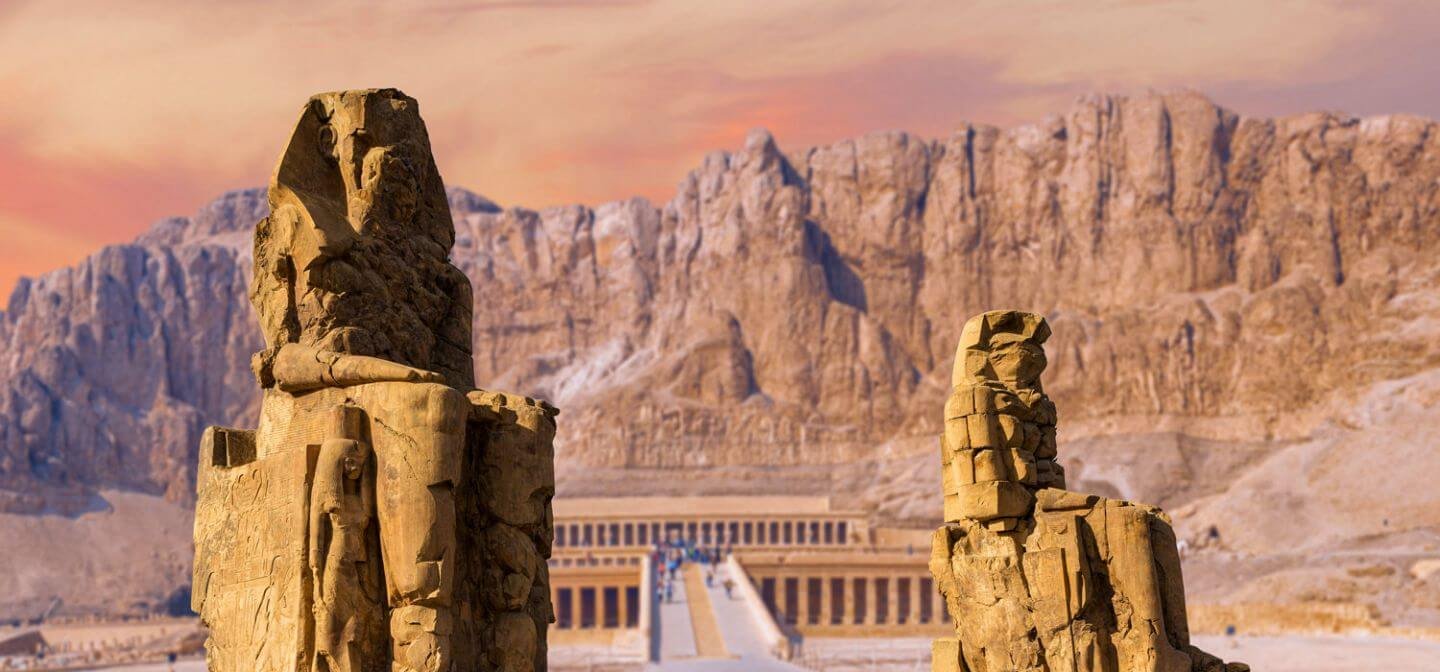
Carved into the towering amphitheater of pale limestone cliffs at Deir el-Bahari, the Mortuary Temple of Queen Hatshepsut stands as one of the most astonishing architectural triumphs of the ancient Mediterranean world. Known to antiquity as Djeser-Djeseru—”The Holy of Holies”—this masterwork was conceived by the royal steward and visionary architect Senenmut during the Eighteenth Dynasty (c. 1479–1458 BCE). Designed to harmonize seamlessly with the natural geology of the Theban mountain, its three tiered colonnaded terraces reflect the golden age of female pharaonic authority, maritime trade, and sacred divine legitimization.
- Three cascading terrace levels linked by grand ascending ramps against the sheer Deir el-Bahari cliffs.
- The historic Punt Colonnade, chronicling Egypt’s legendary maritime expedition to obtain myrrh trees and exotic goods.
- The Divine Birth Reliefs depicting Hatshepsut as the direct biological daughter of Amun-Ra.
- Intact sanctuaries dedicated to Hathor, Anubis, and the solar deity Ra-Horakhty.
- Expedition synergy: Connect your West Bank journey with our bespoke guides to the subterranean tombs of the Valley of the Kings, the grand halls of the Karnak Temple Complex, and our signature Luxury Nile Cruise Planning Guide.
Architectural Genius: The Three Terraces of Djeser-Djeseru
Senenmut departed completely from the fortress-like pylons of traditional temples, creating a light-filled structure characterized by proportional colonnades and open courtyards. Each ascending terrace celebrated a different aspect of Hatshepsut’s reign and sacred relationship with the gods.
The Punt Expedition: An Ancient Trade Odyssey
On the southern side of the Middle Terrace lies the celebrated Punt Colonnade. Unlike traditional pharaonic war records filled with battlefield carnage, these delicate low-relief carvings depict a peaceful expedition to the mysterious land of Punt (modern-day Somalia/Eritrea). The register scenes document pharaonic sailing galleys laden with gold, ebony, ivory, baboons, and living root-balled myrrh trees—marking history’s earliest recorded botanical transplanting expedition.
“I have commanded that a road be made to Punt, that myrrh trees be transplanted into the heart of Thebes, so that Amun may walk in his sacred garden.” — Inscription of Queen Hatshepsut
The Beautiful Feast of the Valley & Posthumous Erasures
Djeser-Djeseru was the prime destination for the annual Beautiful Feast of the Valley. Statues of Amun, Mut, and Khonsu crossed the Nile from Karnak Temple on the golden river barge Userhet-Amun and ascended the long ramp into the sanctuary. Following Hatshepsut’s death, during the late reign of her stepson and co-regent Thutmose III, an effort was made to erase her cartouches, chiseling her portraits away while leaving divine images intact—a political move to re-establish unbroken patriarchal succession rather than simple hatred.
Discerning Traveler Tips
- Early Morning Advantage: The temple faces east and absorbs the morning sun directly. Arrive at 06:30 AM to capture the amber sunrise illumination across the colonnade before the desert sun reaches its peak.
- Cashless Ticketing: The Ministry of Tourism and Antiquities operates strict cashless ticketing (~360 EGP for foreign adults). Bring a Visa or Mastercard; international debit and credit cards are required at the entrance.
- Taf-Taf Shuttle: An electric shuttle train (“taf-taf”) connects the visitor center to the base of the lower courtyard ramp, minimizing the walk over unshaded asphalt.
- Walking Gear & Sun Protection: The wide stone terraces reflect intense glare. Polarized sunglasses, a sun hat, high-SPF sunscreen, and supportive flat walking shoes are essential.
Experience Hatshepsut’s Temple with Cheers Egypt Tours
Deciphering the sophisticated architectural lines and intriguing political succession of Queen Hatshepsut requires seasoned Egyptological scholarship and seamless comfort. When you book your West Bank Luxor excursion with Cheers Egypt Tours, every detail is organized with royal refinement.
You will be guided by certified senior Egyptologists who bring the colorful Punt reliefs and hidden chapels of Hathor to life, safely steering you around large group coach crowds. Combined with VIP fast-track airport coordination and chauffeured, air-conditioned luxury vehicle transfers, Cheers Egypt Tours ensures an unhurried, unforgettable expedition through ancient Thebes.
Frequently Asked Questions
Why was Hatshepsut represented as a male king in temple carvings?
Ancient Egyptian kingship was deeply rooted in the concept of divine cosmic order (Ma’at) and traditionally embodied by the male god Horus. To legitimate her supreme rule without destabilizing religious dogma, Hatshepsut was depicted wearing the royal kilt, the nemes headdress, and the ceremonial false beard, blending royal male iconography with female grammatical texts.
How long does it take to tour Hatshepsut’s Mortuary Temple?
A typical guided tour takes approximately 1.5 to 2 hours. This provides ample time to walk up the three terraces, inspect the Punt and Birth reliefs in the middle portico, explore the Chapel of Hathor, and examine the restored Osiride statues on the upper terrace.
Can Hatshepsut’s Temple be combined with the Valley of the Kings on the same day?
Yes, they are situated on opposite sides of the same limestone ridge in the Theban Necropolis, only a short 10-minute private drive apart. A classic morning West Bank itinerary with Cheers Egypt Tours begins at the Valley of the Kings, continues to Hatshepsut’s Temple, and concludes at the Colossi of Memnon.
Why should I book my Hatshepsut Temple tour with Cheers Egypt Tours?
Visiting the West Bank independently can involve crowded ticket kiosks, unshaded long walks, and rushed group pacing. Cheers Egypt Tours ensures pre-purchased cashless admissions, dedicated private climate-controlled transport right to the site gates, and licensed senior Egyptologist guides who tailor the history to your personal interests.
[EXCERPT] Explore the magnificent Mortuary Temple of Queen Hatshepsut at Deir el-Bahari with expert Egyptologist insights, Punt expedition history, tickets, and luxury private tours with Cheers Egypt Tours. [/EXCERPT]
Our articles are researched and written by licensed master Egyptologists and private VIP concierges with decades of experience escorting international travelers across Egypt.